Mcp Alchemy

A MCP (model context protocol) server that provides the LLM with access to and knowledge about relational databases such as SQLite, PostgreSQL, MySQL & MariaDB, Oracle, and MS-SQL.
Overview
What is MCP-Alchemy?
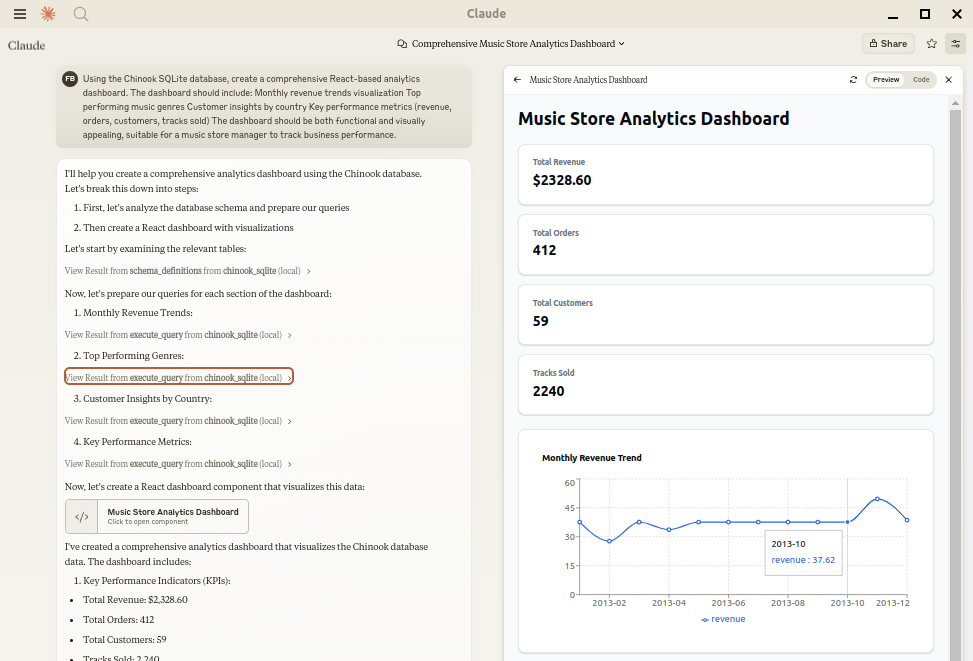
MCP-Alchemy is a Model Context Protocol (MCP) server designed to provide Large Language Models (LLMs) with access to and knowledge about various relational databases. This includes popular databases such as SQLite, PostgreSQL, MySQL, MariaDB, Oracle, and MS-SQL. By leveraging MCP-Alchemy, developers can enhance their applications with the ability to interact seamlessly with these databases, enabling more dynamic and data-driven functionalities.
Features of MCP-Alchemy
- Multi-Database Support: MCP-Alchemy supports a wide range of relational databases, allowing for versatile integration and data management.
- Enhanced LLM Interaction: It enables LLMs to retrieve and manipulate data from databases, making them more powerful and context-aware.
- Open Source: The project is publicly available, encouraging collaboration and contributions from developers worldwide.
- User-Friendly Interface: Designed with usability in mind, MCP-Alchemy provides a straightforward interface for developers to interact with databases.
- Robust Documentation: Comprehensive documentation is available to assist users in setting up and utilizing the server effectively.
How to Use MCP-Alchemy
- Installation: Begin by cloning the MCP-Alchemy repository from GitHub. Use the command:
git clone https://github.com/runekaagaard/mcp-alchemy.git - Setup: Follow the installation instructions in the documentation to set up the server on your local machine or server environment.
- Configuration: Configure the server to connect to your desired relational databases by modifying the configuration files as per your database credentials.
- Integration: Integrate MCP-Alchemy with your LLM application by using the provided API endpoints to send queries and receive responses.
- Testing: Test the integration by running sample queries to ensure that the LLM can access and manipulate data as expected.
Frequently Asked Questions
What databases are supported by MCP-Alchemy?
MCP-Alchemy supports several relational databases, including SQLite, PostgreSQL, MySQL, MariaDB, Oracle, and MS-SQL.
Is MCP-Alchemy free to use?
Yes, MCP-Alchemy is an open-source project, and it is free to use under the MPL-2.0 license.
How can I contribute to MCP-Alchemy?
You can contribute by forking the repository, making improvements, and submitting a pull request. Additionally, you can report issues or suggest features through the GitHub issues page.
Where can I find the documentation?
The documentation is available in the repository and provides detailed instructions on installation, configuration, and usage.
Can MCP-Alchemy be used in production?
Yes, MCP-Alchemy is designed to be robust and can be used in production environments, provided it is properly configured and tested.
Details
Server Config
{
  "mcpServers": {
    "mcp-alchemy": {
      "command": "docker",
      "args": [
        "run",
        "-i",
        "--rm",
        "ghcr.io/metorial/mcp-container--runekaagaard--mcp-alchemy--mcp-alchemy",
        "mcp-alchemy"
      ],
      "env": {
        "DB_URL": "db-url"
      }
    }
  }
}


